Tools
How to Use a Hair Straightener (Beginners)
By Embellishers · · 6 min read
"How to use hair straightener for the first time" is one of the most searched hair-tool questions in Pakistan, along with "how to use hair straightener to curl hair" and "how to use hair straightener brush". A straightener looks simple, but technique makes the difference between sleek, shiny hair and fried ends.
Here's a beginner-friendly guide.
What you'll need
- A straightener. One with temperature control is best for beginners, like the KM-471 Professional Hair Straightener with Temperature Control
- A heat protectant spray or serum
- Sectioning clips or hair bands
- A wide-tooth comb
Step 1: Start with clean, completely dry hair
Wash and condition as usual, then dry your hair completely, either naturally or with a hair dryer. Never straighten damp hair. If you hear sizzling, stop.
Step 2: Protect
Apply a heat protectant to your lengths and ends, and comb it through.
Step 3: Set the temperature
Start low. Fine, coloured or damaged hair needs lower heat. Thick, coarse or curly hair may need more. Increase gradually only if your hair isn't straightening after one slow pass. Your manual will give the recommended range.
Step 4: Section your hair
Clip the top layers up. Start at the bottom, at the nape of your neck, with sections about 1–2 inches wide. Smaller sections give better results with less heat.
Step 5: Glide slowly
- Place the section between the plates close to the root (but not touching your scalp).
- Close the straightener gently. Don't squeeze hard.
- Glide slowly and steadily down to the ends in one smooth pass.
- Use a comb just ahead of the straightener (the "chase method") for extra-smooth results.
One slow pass is better than many fast ones.
Step 6: Work your way up
Release the next layer and repeat until you reach the crown. For the front sections, angle the straightener slightly away from your face.
Step 7: Finish
Let your hair cool for a few minutes before brushing or tying it up, so the style sets. Smooth flyaways with a drop of light serum on the ends.
How to curl your hair with a straightener
- Take a 1-inch section.
- Clamp it near the root.
- Twist the straightener half a turn away from your face.
- Glide slowly down to the ends while keeping the twist.
- Let the curl cool in your palm, then run your fingers through it for soft waves.
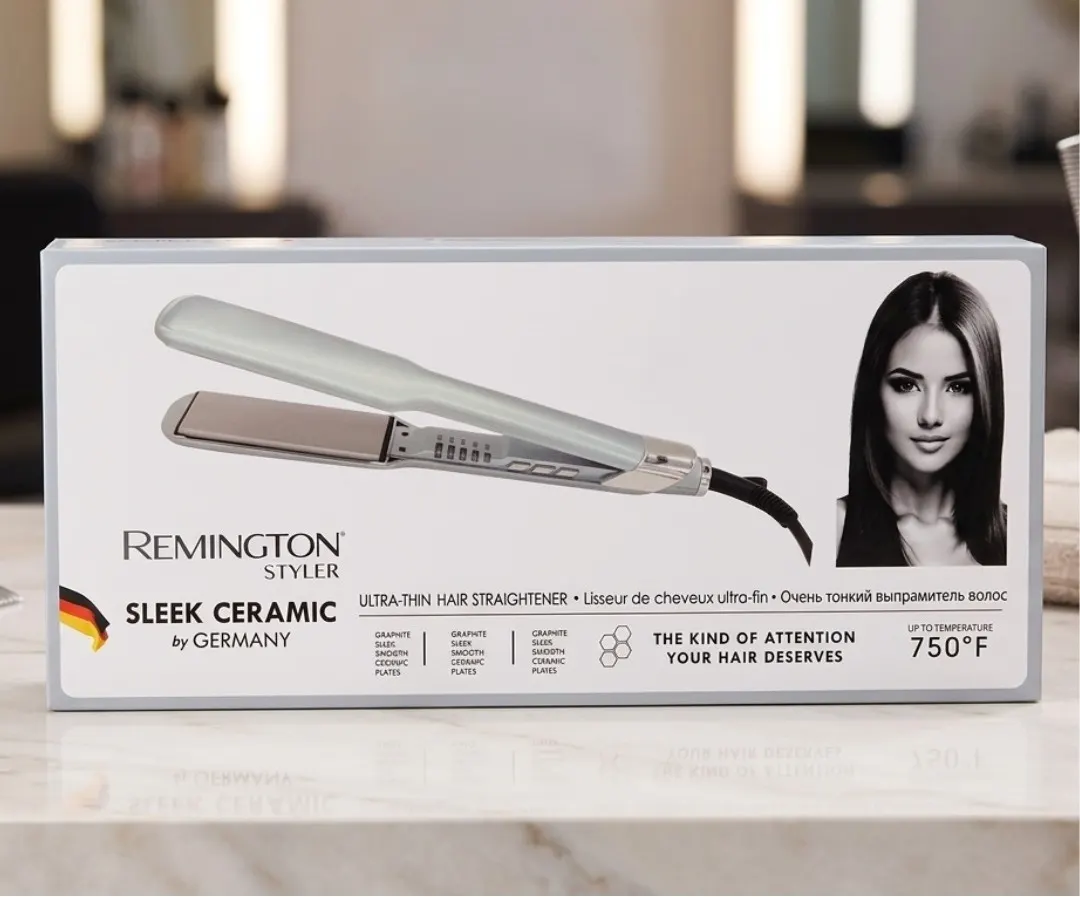
Narrow or slim plates are easiest for curls. Try the Remington Sleek Ceramic Ultra-Thin Hair Straightener (Rs 4,000). For bigger waves, take larger sections and glide faster.
Prefer a dedicated tool? A curling wand or iron makes it easier. Browse options in hair stylers.
How to use a hair straightener brush
Straightening brushes give a softer, more natural result and are faster for beginners:
- Start with dry, detangled hair and heat protectant.
- Section your hair, as with a flat iron.
- Place the brush under a section near the root and brush slowly downwards, keeping the bristles in contact with your hair.
- Repeat once or twice per section.
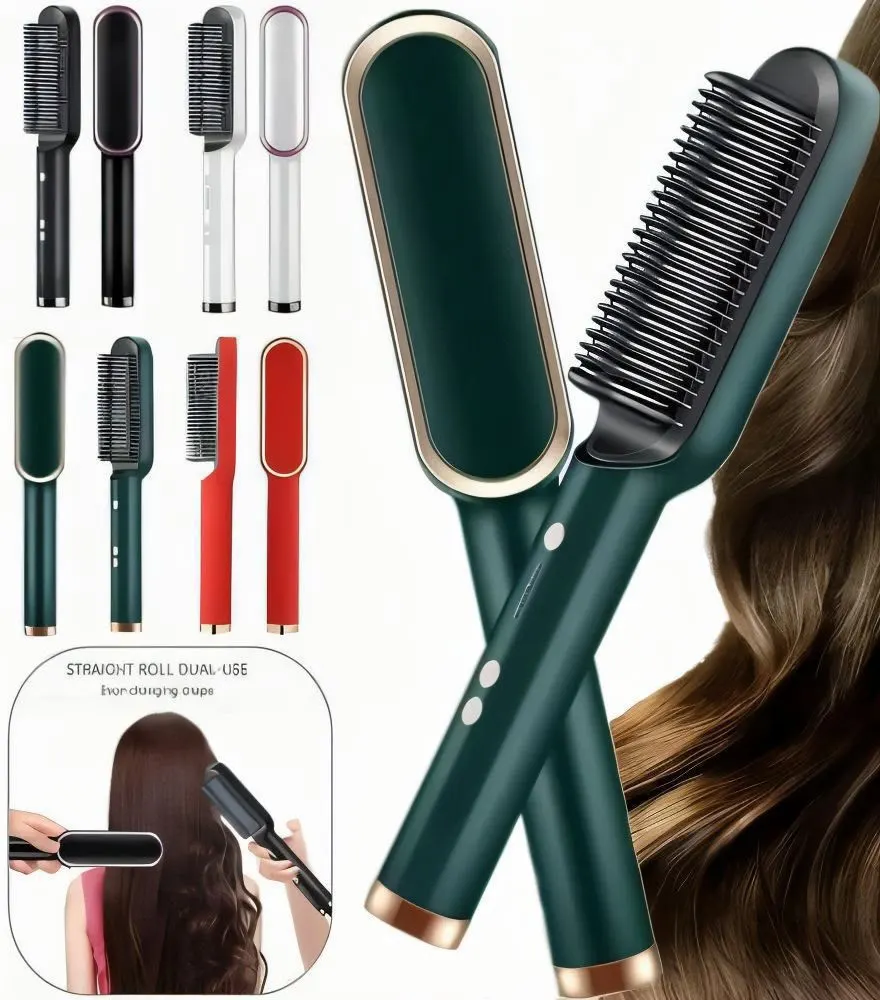
In-stock options: the Remington Professional Keratin Hair Straightening Brush (Rs 12,700) and, for a budget pick, the HQT-909 Electric Hair Brush Straightener (Mix/Random color) (Rs 750).
Using a straightener on short hair and for men
- Choose narrow plates for short hair.
- Use low heat and small sections.
- For men, a straightener can smooth frizz or add direction to longer styles on top. Glide upwards or backwards in the direction you want your hair to sit.
- Keep the plates away from your scalp, ears and neck.
Common beginner mistakes
| Mistake | Fix |
|---|---|
| Straightening damp hair | Dry completely first |
| Maximum heat every time | Start low, increase slowly |
| Big, thick sections | Use 1–2 inch sections |
| Many fast passes | One slow pass |
| Skipping heat protectant | Use it every time |
| Clamping too hard | Close gently and glide |
Safety
- Use a heat-resistant mat, and never leave a hot straightener on a bed or sofa.
- Unplug it straight after use.
- Keep it away from water and children.
- Let it cool completely before storing.
- If your hair feels straw-like or snaps easily, take a break from heat and focus on conditioning and oiling.
Choosing your first straightener
Look for adjustable temperature, smooth ceramic or tourmaline plates, auto shut-off and a swivel cord. Our guide to the best hair straightener in Pakistan compares the options in more detail.
Prep products by hair type
| Hair type | Before straightening | After |
|---|---|---|
| Fine | Light heat-protectant spray | Very small drop of serum on the ends |
| Thick or coarse | Heat-protectant cream or serum | Light oil on the lengths |
| Curly or frizzy | Protectant plus a smoothing product | Anti-frizz serum |
| Coloured or damaged | Protectant, lowest heat | Deep condition weekly |
How long does straightened hair last?
It lasts until your next wash, or until humidity or sweat gets to it. To make it last longer:
- Sleep on a silk or satin pillowcase, or tie your hair loosely.
- Avoid steam, such as hot showers without a shower cap, or cooking over boiling pots with your hair loose.
- Use dry shampoo at the roots instead of washing every day.
- Carry a small anti-frizz serum for humid days.
Quick troubleshooting
- Hair looks flat: lift at the roots as you glide.
- Dents or lines: glide in one continuous motion without pausing.
Bottom line
Dry hair, heat protectant, low heat, small sections, one slow pass. That's really all there is to it. Practise a few times when you aren't in a rush, and you'll soon have smooth, shiny hair (or curls) in under 20 minutes.
Prices checked 14 Oct 2026 on embellishers.store and may change. Check the product page for the current price and stock.
Frequently asked questions
Start on the lowest setting that straightens your hair. Fine or damaged hair needs less heat, and thick or coarse hair may need more. Check your manual.
No. Always straighten completely dry hair. Straightening damp hair can damage it.
Clamp a section, twist the straightener half a turn away from your face, and glide slowly down. Narrow plates work best.
Yes. Narrow plates work well on short hair. Use low heat and small sections.
Fewer times a week is better for hair health. Always use heat protection and give your hair heat-free days.